Daan Roosegaarde
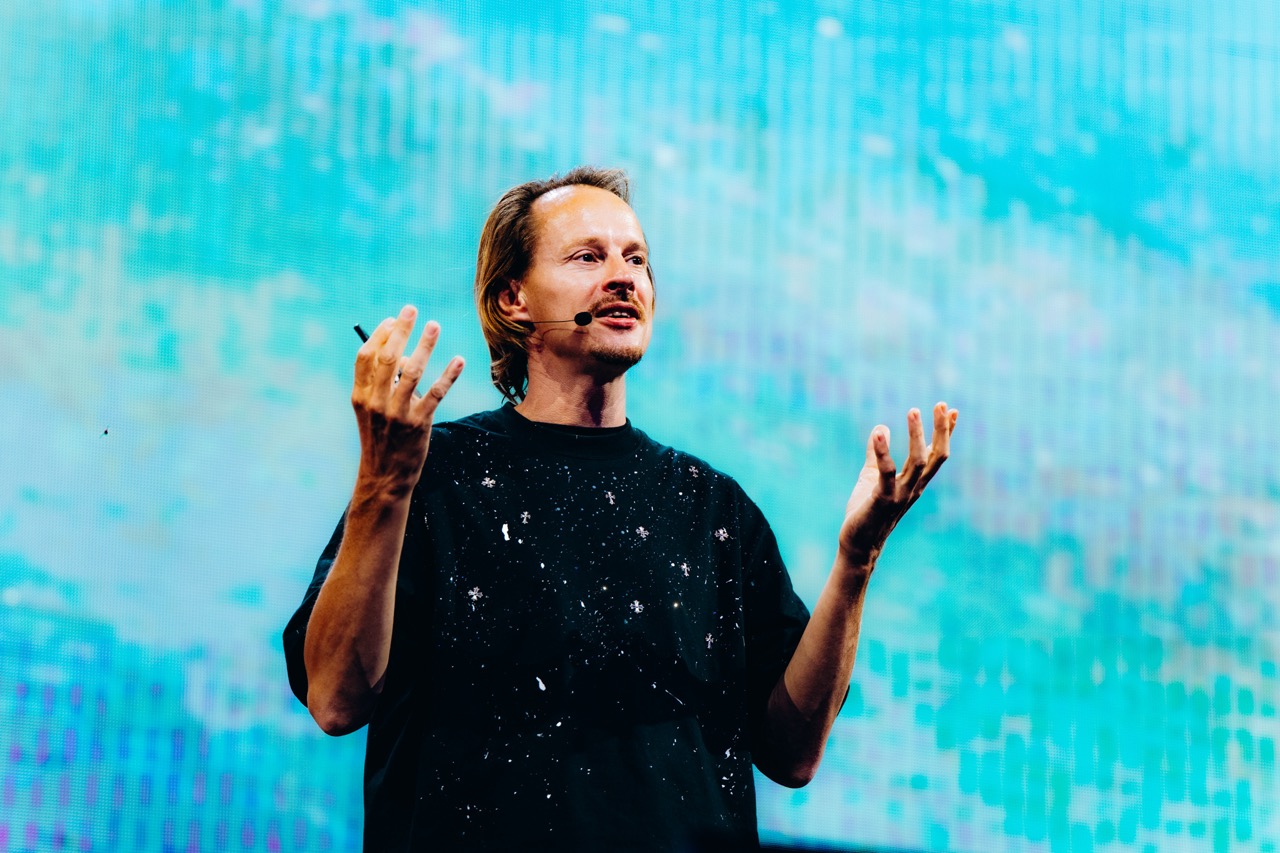
Artist, innovator and visionary of the future
Dutch artist and innovator Daan Roosegaarde (1979) is a creative thinker and designer known for social projects that explore the connection between people, technology, and nature. From an early age, Roosegaarde was inspired by nature’s wonders, like glowing fireflies and jellyfish. His fascination with both nature and technology is reflected in iconic works such as the SMOG FREE PROJECT (the world’s largest outdoor air purifier that transforms smog into jewelry), the VAN GOGH PATH (a glowing bicycle path), and URBAN SUN, which purifies public spaces from coronavirus.
Daan Roosegaarde studied Fine Arts and earned a Master’s in architecture from The Berlage Institute in Rotterdam. In 2007, he founded Studio Roosegaarde, collaborating with his team to create future landscapes.
He has received prestigious awards, including the London Design Innovation Medal, INDEX Design Award, and two Dutch Design Awards, and has exhibited at the Design Museum London, Stedelijk Museum Amsterdam, and Tate Modern.
Roosegaarde is a Young Global Leader at the World Economic Forum, a professor at Tongji University in Shanghai, a member of NASA’s Innovation team, and an award-winning movie director with his film Return of the Fireflies. Recognized by Forbes and WIRED as a creative changemaker.
In his speech Daan Roosegaarde explores how creativity, technology and nature can shape a more livable future. At Studio Roosegaarde, his social design lab in Rotterdam, he creates public works that turn urgent challenges into shared experiences: WATERLICHT makes the impact of rising water visible, the SMOG FREE PROJECT turns captured smog into jewelry, and SPARK reinvents fireworks as a more sustainable and animal-friendly celebration.
At the heart of his practice is the Dutch word Schoonheid, meaning both beauty and cleanliness. For Roosegaarde, beauty is not decoration, but a way to activate people, make problems visible and imagine alternatives. In his keynote, he will take the audience through his Landscapes of the Future and explore what happens when technology leaves the screen and becomes part of our streets, skies and daily lives. His message is simple: the future is not something we wait for. It is something we create together.
“Creativity is our true capital. We need to invest not only in new technologies, but in the human imagination that connects what we have with what could be, turning history into the future and problems into possibilities.”