Carlo Ratti
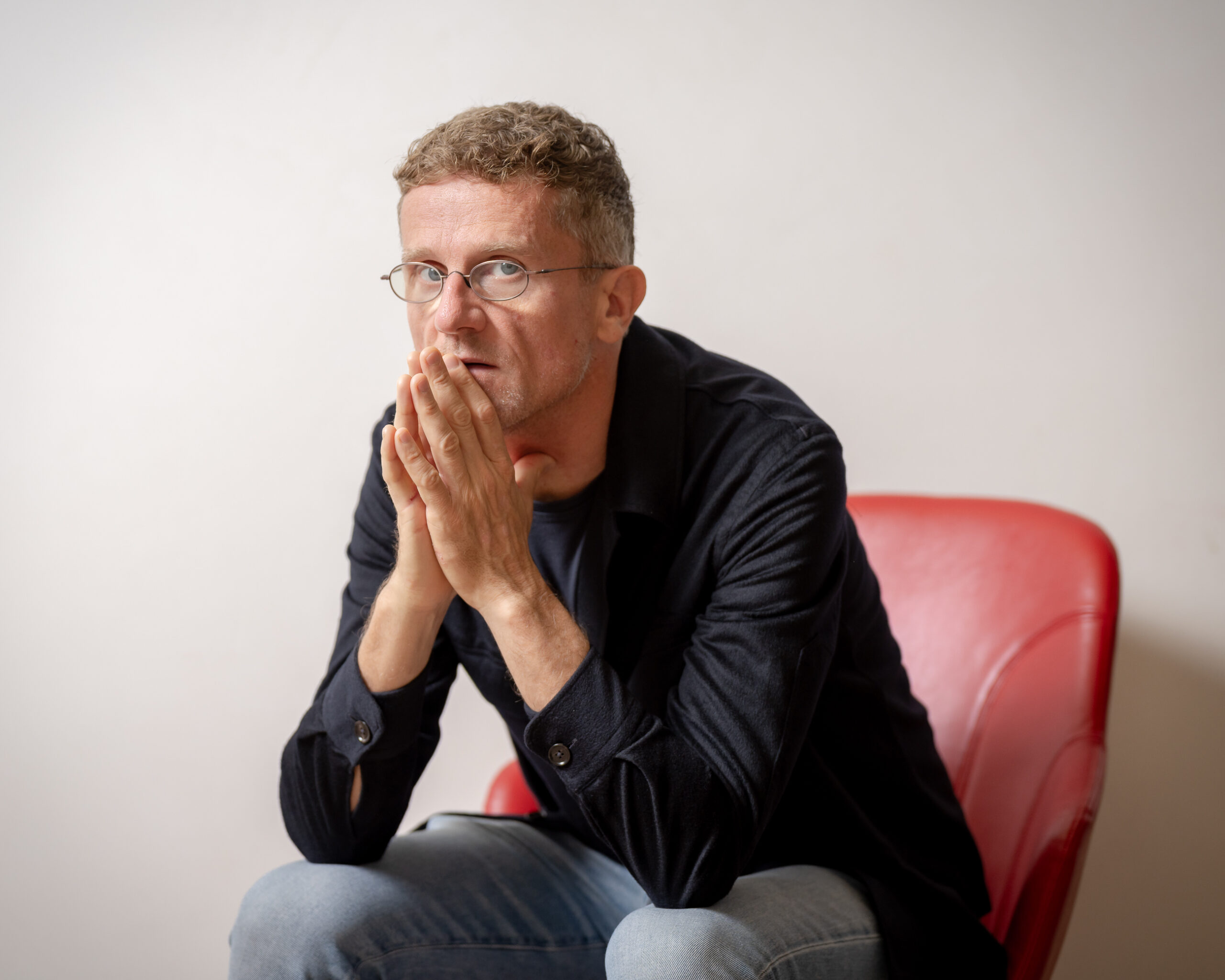
Architect, engineer and urban innovator
Carlo Ratti is an architect and engineer who leads the design and innovation practice CRA-Carlo Ratti Associati and teaches at the Massachusetts Institute of Technology, where he directs the MIT Senseable City Lab. He is also a professor at the Politecnico di Milano. His work explores how digital tools and collective intelligence can help cities adapt to a changing world. He graduated from the Politecnico di Torino and the École Nationale des Ponts et Chaussées in Paris, and later earned an M.Phil. and Ph.D. from the University of Cambridge. His work has been exhibited at venues including La Biennale di Venezia, the Design Museum in Barcelona, the Science Museum in London, and the Museum of Modern Art in New York. He was the Curator of the 2025 Venice Architecture Biennale.
In his speach he will talk about way we live, work, and interact has changed profoundly over the past few decades, shaped by a global network of connectivity that now links much of the planet. Today, we are witnessing a further shift: digital technologies are no longer confined to screens, but are increasingly embedded in the physical world—the traditional realm of architecture and urban design. This convergence, often described as the Internet of Things, is transforming buildings and cities into responsive systems that sense, learn, and adapt. Much like the early Internet, this new wave of technology opens up possibilities across multiple domains—from energy and mobility to production, public space, and civic participation. Prof. Carlo Ratti’s contribution will explore these transformations from a critical and interdisciplinary perspective, drawing on research from the MIT Senseable City Lab and built projects by Carlo Ratti Associati, examining how technology can help make cities more inclusive, resilient, and human-centered.
“For me a crossroads is not a single decision but something that happens every day, in the relationship between the natural and the artificial. Every project sits at that junction, and the work is not to resolve the tension but to design with it.”